

The Stoned Crab
Seafood Restaurants · Key West, FL

About
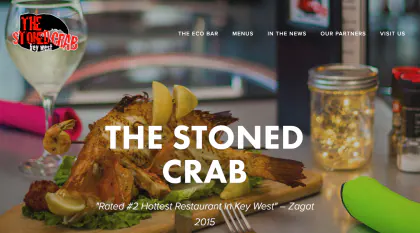
RealReviews profileThe Stoned Crab is a waterfront seafood restaurant beside Ibis Bay at 3101 North Roosevelt Boulevard. The official operation emphasizes stone crab, lobster, shrimp and local fish, while current customer evidence is mixed in a useful way: the setting, parking, staff and successful seafood plates earn strong praise, but paella, bisque, fried seafood, price/value and service follow-up can vary materially by visit.
The Stoned Crab: what to know
RealReviews editorial research · checked 2026-08-06RealReviews consensus score 81/100, High confidence. The packet documents recurring seafood, waterfront setting, service and value themes across five source domains and 14 inspected bodies. The Stoned Crab is a reasonable choice when the waterfront setting and a well-executed seafood plate matter as much as the meal itself. Reviews repeatedly praise the Ibis Bay atmosphere, parking, friendly staff and successful stone crab, lobster and shrimp dishes. They also document expensive disappointments: salty bisque, mushy or overcooked seafood, paella that misses the expected texture and service that disappears at some tables. Treat it as an atmosphere-led seafood option with upside, not as a guaranteed premium meal.
Strongest fit
- Visitors who want a waterfront Key West seafood setting with resort-property parking and a full bar
- Diners comfortable paying premium seafood prices when the catch and preparation are the main attraction
- Groups who value attentive individual servers and an open-air, nautical atmosphere
Verify before booking The Stoned Crab
- Paella, bisque and fried or overcooked seafood appear in negative bodies; preparation is less consistent than the marketing suggests
- Value drops quickly when premium pricing meets a small portion or a dish that does not match its description
- Service can be excellent with one server and frustrating with another, so timing and table follow-up are not guaranteed
Why people choose The Stoned Crab
The restaurant's strongest differentiator is its location. Official pages place it beside Ibis Bay on North Roosevelt, and independent bodies repeatedly mention the waterfront or open-air setting, nautical decor and the convenience of parking on the resort property. That makes the visit feel different from a downtown seafood room and can justify the choice for a traveler who wants atmosphere with dinner.
Staff is another repeat strength, but it is personal rather than universal. One recent body describes a server who anticipated drink and sauce needs; others praise friendly bartenders and prompt attention. The restaurant can deliver a memorable meal when the service and kitchen line up, which is why the negative evidence should be read as risk boundaries rather than a blanket rejection.
What seafood reviews actually support
The positive bodies mention stone crab, lobster, shrimp, fish and pasta dishes that were fresh, flavorful or well presented. The operator says two fishing boats supply local catches, but RealReviews treats that as a first-party claim; the customer evidence is strongest when a diner names the dish and explains what worked. Several visitors describe returning or recommending the restaurant after a successful meal.
The counterevidence is equally concrete. One dinner reported salty crab bisque, mushy lobster and paella that tasted unlike expected saffron rice; another described rubbery seafood and wet rice. These are not enough to say every plate fails, but they are enough to warn against assuming that a premium menu price guarantees perfect execution. If the dish is expensive or unfamiliar, ask how it is prepared and check the final description before ordering.
Value and service tradeoffs
Value depends on the interaction between the setting, the portion and the plate. A visitor who receives fresh seafood and attentive service may call the experience a good value; a visitor who receives a disappointing paella or unclear portion can see the same pricing as excessive. The review pattern is therefore a classic occasion tradeoff: the restaurant sells a place and an experience as well as food.
Service variability matters because it changes how quickly a problem is corrected. Some bodies praise proactive servers, while others say the server vanished or did not return until the meal was over. Management responses acknowledge some complaints, but those replies were excluded from the customer count. Build in time and raise a problem early if the dish or service does not match what was described.
Who should choose it
Choose The Stoned Crab when the waterfront atmosphere, parking and seafood setting are important and you can tolerate some menu variability. It is a better fit for a relaxed meal than for a rigid schedule or a guaranteed special-occasion outcome. The strongest evidence supports the setting, staff and selected fresh-catch dishes, not an unconditional promise about every entrée.
Compare other Key West seafood restaurants if predictable value, quiet pacing or consistent preparation matters more than the Ibis Bay setting. The High tier means the strengths and cautions recur across a meaningful sample; it does not turn an outside star average into a RealReviews score. The honest decision is whether the atmosphere and upside justify the risk of a premium miss.
For a birthday, anniversary or other expensive dinner, the safest reading of the evidence is to choose the location for the view and confirm the menu details at the table. That preserves the restaurant's genuine strengths while reducing the chance that a premium expectation rests on one dish or one unusually attentive review.
The waterfront setting is part of the price
The Stoned Crab sits beside Ibis Bay on North Roosevelt with a nautical atmosphere and convenient resort-property parking. Visitors who value the setting may accept more variability than a diner seeking a quiet, tightly controlled room.
Choose the location deliberately rather than treating it as a generic seafood counter.
The seafood wins when preparation lands
Reviews praise stone crab, lobster, shrimp, fish and pasta when fresh, flavorful and well presented. The counterexamples are equally specific: salty bisque, mushy lobster, overcooked seafood or paella texture can materially change the meal.
Ask about current preparations and compare the exact dish, not the restaurant label.
Service is server-dependent
Individual servers and bartenders are often described as attentive, fast, friendly and proactive, while other diners report a disappearing server or slow follow-up. The setting can remain enjoyable while the service response varies.
Leave time for a correction if the meal is tied to a celebration or departure.
Premium pricing needs an all-in check
A waterfront seafood dinner can feel fair when the plate, portion and service match the setting. It can feel poor when premium prices meet a small portion or a disappointing preparation.
Compare total price, portion, dish risk and parking with another seafood restaurant.
Special occasions need a backup plan
The restaurant may fit an anniversary or birthday when the group values the bay setting and can accept some uncertainty. If the meal must be precise, quiet and highly predictable, a different venue may be safer.
Ask about the current menu, timing, seating and recovery path before committing.
Parking changes convenience
The North Roosevelt location and resort-property parking can make the restaurant easier than a Duval stop for drivers. That convenience should be weighed against transport time, menu price and whether the group wants the waterfront setting.
Include parking and the complete travel plan in the comparison.
A mixed review record is useful
The High tier does not mean every dish or visit is excellent. It means the researched sources support repeated strengths and specific recurring cautions that a reader can act on.
Read the plate-level warnings as part of the decision, not as noise around the rating.
Who The Stoned Crab may fit
It may fit diners who want waterfront atmosphere, parking, stone crab or lobster and a memorable setting and who can tolerate dish-level and service variation. Compare alternatives when consistent value or a quiet pace is non-negotiable.
The correct choice depends on the evening’s priorities.
What a useful future review should record
Record dish, preparation, portion, price, server, wait, bay or indoor seating, parking, service recovery and total bill. Those specifics explain whether the current pattern repeats.
A seafood review should identify what was ordered.
Separate the business from the exact job
The researched record for The Stoned Crab combines official identity and service information with dated independent accounts. Scope, crew, price and timing can change the result, so each conclusion keeps those conditions visible.
A business-level summary is useful orientation; the exact job determines fit.
Use positive and negative accounts responsibly
A favorable account shows what worked for one customer, while a critical account identifies a possible failure mode. Repetition and specificity matter more than one dramatic sentence.
RealReviews reports the overlap and names the gaps instead of turning one experience into a universal accusation or guarantee.
Total cost includes friction
Fees, travel, equipment days, permits, access, recurring service and correction effort can change value. Compare the complete job, not just the displayed rate.
Write assumptions down before deciding so alternatives are measured fairly.
Policies should be saved
Warranty, callback, claims, cancellation, permit, payment and change-order rules can change. Save the current written terms and any promise made during a call or estimate.
That record protects the customer and gives the provider a fair chance to respond.
Do not confuse popularity with fit
Aggregate ratings show that people chose the provider; they do not answer whether this reader needs emergency response, a particular license, commercial coverage or a branch-specific callback.
The narrative tradeoffs are what make a shortlist useful.
What stronger evidence would add
The best future account identifies the date, exact service, equipment or fixture, crew, scope, price, response and outcome. Generic praise adds less than one specific, attributable review.
Update the profile when new evidence materially answers a current uncertainty.
Keep the recommendation conditional
Choose The Stoned Crab when its documented strengths match the job and its watch items are manageable. Compare another option when one watch item is a hard requirement.
Verify current details immediately before committing because services, prices, crews and policies change.
A practical final check
Confirm current identity, scope, total price, timing, access, warranty or claims and the one uncertainty most likely to affect the job. Afterward, keep the invoice and document the result.
That loop turns a researched profile into a decision tool and gives future updates better evidence.
A fair negative account is specific
A useful negative account names the date, promised standard, observed problem and response. It avoids turning one disappointing job into a claim about every employee or project.
That standard preserves important warnings while keeping the profile fair and verifiable.
Use the exact question as the handoff
If the concern is warranty, ask for the callback owner. If it is payment, ask when invoices post and what receipts are provided. If it is a permit, ask who closes the inspection.
Specific questions are easier to answer, verify and improve.
Record what is current
Write down the date checked, exact category, license or branch and policy language. If the provider changes a service, crew, permit path or schedule, a dated record makes the next update understandable.
That discipline keeps a local profile useful without pretending it is a permanent contract.
Timing is part of the evidence
Emergency repair, planned installation, recurring service and commercial work have different constraints. Keep timing and purpose attached to the claim rather than averaging every job into one impression.
That context lets a reader plan a comparable service.
The exact scope controls the answer
Cleaning, duct treatment, leak repair, water-heater work and commercial service require different questions, materials and paperwork. Ask the provider to name the exact phase before comparing a quote.
A general service page cannot answer a project-specific risk.
Compare one written alternative
Use the same problem description and requested scope when comparing another provider. Compare license, diagnosis, equipment, warranty, callback, payment, permits and change-order terms.
A fair written comparison is more useful than another unstructured list of stars.
The complete decision includes documentation
Before authorizing service, save the diagnosis, scope, identity details, price, warranty and escalation path. Afterward, keep the invoice, photos and service notes.
That record protects the customer and gives future updates better evidence.
A quote should expose assumptions
Ask what the estimate assumes about access, parts, equipment, permits, labor, disposal, cleanup and a return visit. If one assumption changes, the provider should identify the resulting price or schedule change.
An explicit assumption is easier to compare than a low number with hidden conditions.
A service term is not a service result
A posted policy explains what the provider says it will do; a review body describes what happened in one observed job. Keep those evidence types separate and ask how the policy is applied in the exact situation.
That distinction protects the reader from treating marketing language as a guarantee.
Ask who owns the next step
For a callback, re-clean, warranty, permit or return visit, identify the person or channel responsible and the expected response time. A general office number is not the same as a documented escalation path.
Write that handoff beside the estimate before work starts.
Compare like-for-like scope
A clean, duct treatment, leak repair and installation can have different labor, materials and completion standards. Use the same room count, equipment, access and deadline with every provider.
Matching scope reveals meaningful differences instead of rewarding omitted work.
Dated evidence deserves dated language
Older accounts can identify a question without proving a current pattern. Recent accounts can show a present strength without promising the next result.
The profile keeps dates, source context and counterexamples visible so the reader can judge how much weight to give each account.
The reader should leave with a decision
After reading the profile, a customer should know who may fit, what to ask, which term could change the price and what evidence remains incomplete.
That is more useful than a long recap of ratings because it converts research into a concrete next step before the first call or booking, with the important assumptions still visible for this job.
The customer controls the comparison
Bring the same facts, photos, equipment details and deadline to every provider. Ask each one to state what is excluded and what would trigger a second visit.
That makes the final choice depend on evidence rather than sales momentum.
A narrow warning can still help
A dated complaint about a missed callback, access problem or billing term does not define the whole business. It does identify a question worth asking before money or time is committed.
Specific warnings are more fair and more useful than broad labels.
The final record should be reusable
Keep the estimate, terms, invoice, photos, license check and outcome together. If the work succeeds, that record helps a future review; if it fails, it supports a precise correction request.
Good documentation improves the next customer decision and gives the business a clear factual record to answer later too now.
Your file for The Stoned Crab
- Paella, bisque and fried or overcooked seafood appear in negative bodies; preparation is less consistent than the marketing suggests
- Value drops quickly when premium pricing meets a small portion or a dish that does not match its description
- Service can be excellent with one server and frustrating with another, so timing and table follow-up are not guaranteed
Services listed
1 sourcedEvidence checked for The Stoned Crab
Sources and update dates- Editorial research checked 2026-08-06
- 6 approved source records
- Official-site details checked Aug 2026
Request a table with The Stoned Crab
Request a reservationTell us what you need from The Stoned Crab, where the work is, and when it matters. The request keeps the reply easy to compare with another provider.
Projects and media
2 approved images
Share your experience
Describe the job and what happened. Add timing or price context only when you can share it; every submission is reviewed before publication.
Questions to ask before hiring
Ask a questionPeople also compare
Nearby profilesWhere The Stoned Crab's information comes from
Sources, ownership, and correctionsKeep the hiring record
Save the written scope and warranty with the quote. A correction changes the public profile only after review; an owner claim does not erase criticism or control customer submissions.
RealReviews records the selected request details. The business still confirms availability, price, and acceptance. How RealReviews handles sources, ratings and corrections.