
Independent sandbar tour guide
Key West Sandbar Tours: Compare Shared Trips and Private Charters
Compare Key West sandbar trips by private or shared format, boat, group size, water activities, departure point, weather terms, accessibility, and total trip time.
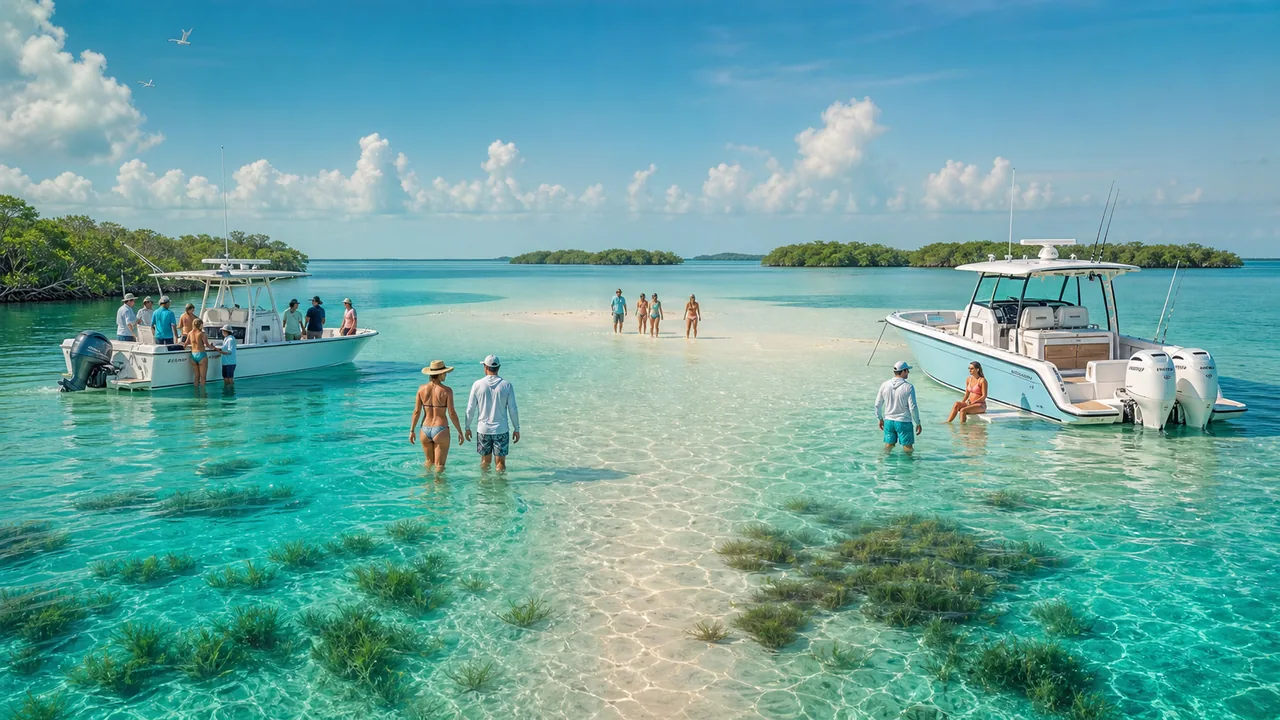
A Key West sandbar tour can mean a large shared catamaran with kayaking, a small private center-console charter, or a party-oriented boat built around time in shallow water. The phrase does not guarantee the same destination, schedule, privacy, shade, food, equipment, or swimming conditions.
A sandbar trip should be chosen by vessel, passenger cap, travel time, water depth, shade, restroom, food and drink, included equipment, departure point, and weather policy. Conditions and routes change with wind, tide, maintenance, and the exact product booked, so compare the named departure rather than the company logo alone.
Match the trip
Send one useful sandbar inquiry
Share the date, group size, ages, private or shared preference, activity interests, accessibility needs, and schedule constraints. The operator must confirm the vessel, conditions, price, and availability.
Shared tour or private charter is the first decision
A shared sandbar trip sells seats on a scheduled departure. It usually lowers the cost for one or two travelers and provides a predictable itinerary, crew, and equipment. The tradeoff is limited control: departure time, music, route, activity order, passenger mix, and time at the sandbar belong to the product rather than your group.
A private charter prices the boat for your party and can adapt the pace within safe, legal, and weather-dependent limits. That is useful for families with young children, multigenerational groups, celebrations, photographers, and travelers who want more quiet time. Private does not mean unrestricted. Captain authority, sanctuary rules, vessel capacity, weather, and the booked duration still control.
Compare the complete price. Shared tours may add taxes, fees, parking, photographs, or gratuity. Private charters may quote by boat and duration, with fuel, captain, ice, drinks, equipment, and gratuity handled differently. Divide by the real number of guests only after every required charge is included.
- One or two guests: shared departures usually offer better value.
- Families or celebrations needing flexibility: private charters often fit better.
- Travelers prone to motion discomfort: ask about vessel size, seating, and route.
- Anyone with mobility limits: verify boarding and water entry before booking.
Fury, Sebago, Salty Bottom, and Salty Sandbars are not the same product
Fury’s current Island Adventure page describes a larger-vessel trip combining shallow-water sandbar time with guided kayaking through mangroves and paddleboarding. That product suits travelers who want several activities inside one scheduled outing. The exact vessel, departure point, swimming expectations, and seasonal schedule belong to the named trip, not every Fury product.
Sebago lists a Sandbar Safari among a broad menu of sailing, snorkeling, parasailing, and combination tours. Confirm which boat operates the departure, maximum passengers, what “eco” activity is included, beverage service, shade, restroom access, and how much of the advertised duration is travel versus stopped time.
Salty Bottom Boats markets private sandbar charters for families and celebrations and also handles larger groups through different vessels. Salty Sandbars presents a smaller private boating experience. With either operator, confirm the exact boat by name or description. Photographs across a company website may show multiple vessels with different layouts, ladders, cover, seating, and capacities.
The destination is a moving plan, not an amusement-park address
A sandbar is shaped by tide, wind, current, visibility, traffic, and water depth. Operators may choose among backcountry locations rather than promise one fixed patch of sand. Ask how the captain selects the destination and what alternative experience is offered when conditions make the preferred area unsafe or unpleasant.
Low water can expose more sand but complicate approach; higher water may mean standing in deeper water. Wind can roughen an otherwise protected route. Recent rain can change visibility. No responsible operator can guarantee glass-flat turquoise water, wildlife, or a specific depth on a future date.
The honest comparison is about process: how the operator communicates conditions, chooses a safe route, describes the likely water entry, and handles a materially changed trip. A beautiful social photograph is evidence that a scene occurred, not a guarantee for your departure.
Boat layout matters for four hours of comfort
Ask for the vessel type, legal passenger capacity, expected passenger count, seating with back support, shade, toilet, freshwater rinse, ladder, railings, dry storage, and space for coolers or gear. A stable catamaran may suit a traveler who dislikes small-boat motion. A smaller center-console can reach quieter places but may offer less shade or no enclosed restroom.
Boarding deserves its own answer. A dock step, narrow gunwale, ladder, or transfer into shallow water can be difficult for someone with limited mobility, a recent injury, pregnancy, or a small child. “Accessible” should describe the actual route from parking to seat to water, not simply a friendly willingness to help.
Families should ask about life jackets in the correct child sizes, minimum ages, flotation devices, shade, restroom arrangements, and whether a child can remain aboard with an adult. Travelers who do not swim should tell the operator before booking and clarify which activities can be enjoyed without entering the water.
Read the inclusions line by line
“Drinks included” may mean water and soft drinks, beer and wine after water activities, or a broader bar package. “Lunch” may mean a light snack rather than a full meal. “Gear” may include paddleboards and kayaks but not prescription masks, towels, sun shirts, or waterproof phone protection. Obtain the current list for the specific trip.
Bring reef-conscious sun protection, a secure hat, polarized glasses with a strap, reusable water, a towel if not supplied, and medication you already know you need. Avoid loose trash and single-use items that can blow overboard. Keep valuables minimal and ask what dry storage is available.
Alcohol changes safety and participation. Operators may restrict drinking until after snorkeling, kayaking, or paddleboarding. The captain can refuse unsafe behavior. A party-focused group should discuss expectations honestly; a family seeking a quiet eco trip should ask about passenger mix or choose private.
Weather, cancellation, and the difference between safe and ideal
Florida Keys weather can be localized. A forecast icon for Key West does not describe every backcountry route, and a sunny morning can still carry wind or thunderstorms. The captain decides whether the vessel can operate safely. Travelers decide if the operator’s contract gives acceptable options when the day is safe but not picturesque.
Read operator cancellation, no-show, late-arrival, minimum-passenger, and weather terms before paying. Ask what happens if the operator cancels, changes the itinerary, shortens the trip, or offers a reschedule that conflicts with a flight. Travel insurance may matter for a short trip with no flexible day.
Arrive early enough to park, find the correct marina, sign waivers, and receive instructions. Key West traffic and parking can consume more time than the map suggests. A boat generally cannot hold a shared departure for one late group, and a private charter’s paid clock may begin at the scheduled time.
Responsible boating protects the reason people book
The Florida Keys National Marine Sanctuary asks boaters to avoid damaging seagrass, coral, and other shallow habitat. Props and anchors can scar submerged resources. Guests should follow the captain’s instructions, avoid standing on coral, secure trash, and never chase or feed wildlife.
Ask how an operator anchors or moors, manages waste, briefs guests, and chooses routes in shallow water. A credible answer should be specific without revealing sensitive wildlife locations. Environmental language on a sales page is useful only when operating practices support it.
Wild dolphins, rays, turtles, and birds may appear, but wildlife is not an inclusion. Treat sightings as incidental. Operators should maintain legal distance and adjust behavior to protect animals. A promise of guaranteed wildlife is a reason to ask harder questions.
Use public reviews at the product level
Company-wide ratings can blend parasailing, snorkeling, sunset cruises, rentals, and sandbar charters. Search recent reviews for the exact trip name and, when relevant, vessel. Repeated comments about crew communication, crowding, equipment, boarding, itinerary, and cancellation handling are more useful than generic praise.
Keep scale in perspective. A large operator may have thousands of reviews across products and years. A private captain may have fewer reviews but more product consistency. Neither review count nor average alone establishes fit. Read how the business responds when weather disrupts a plan or a guest misunderstands an inclusion.
RealReviews displays outside aggregates with their source label and keeps first-party reviews separate. Use the profile to verify identity and compare practical fit, then obtain the current booking terms from the operator.
The booking checklist that prevents the common mismatch
Send the same brief to each finalist: date, flexible alternatives, adults, children and ages, private or shared preference, celebration type, swimming ability, mobility constraints, desired activities, food needs, alcohol expectations, pickup limits, and hard return time. Ask for the named vessel, maximum and expected passengers, departure address, dock-to-dock duration, inclusions, total with taxes and fees, gratuity guidance, and cancellation terms.
For private trips, ask how itinerary changes are approved and what extra time costs. For shared trips, ask about minimum passenger requirements and the likely group size. For every trip, confirm the emergency contact, check-in time, parking, what to bring, and what cannot come aboard.
The best sandbar tour is the one whose format matches your group and whose operator answers operational questions clearly. Price becomes meaningful only after the experience is defined.
The final operator check should happen close to departure
Ask where the captain expects to go, what conditions could change that plan, and what the operator does if wind, lightning, visibility, or tide makes the advertised activity a poor fit. A responsible answer may be conditional. The useful promise is a safe decision process, not certainty about one patch of shallow water.
Sources and verification
Rules and public requirements link to the responsible agency. Business-specific service claims are checked against privately retained official material, while public ratings remain attributed to their original source. RealReviews does not turn outside reviews into invented testimonials, blend unrelated platforms into a house score, or sell placement in these comparisons. Recheck licenses, availability, scope, and price before hiring.
Frequently asked questions
Is a private Key West sandbar tour worth it?
Yes for a family or group that values its own schedule, music, pace, swimming ability, and route; no for one or two budget travelers who only need a seat to a sandbar. Divide the complete private-boat price by the group size and compare it with shared seats, including taxes, captain, fuel, food, drinks, and gratuity.
Do Key West sandbar tours have bathrooms?
Yes, some do, but many small private boats do not. Larger catamarans are the safer format when a marine toilet is essential. Before paying, obtain the exact vessel name and a yes-or-no answer about an onboard head; nearby land restrooms do not solve a multi-hour trip once the boat departs.
Can nonswimmers enjoy a sandbar tour?
Yes, if the boat has comfortable seating, shade, a safe ladder, flotation, and activities that do not require deep-water swimming. Choose a shallow sandbar-focused itinerary rather than a reef-snorkeling product, disclose the nonswimmer before booking, and require the operator to explain typical water depth and what can be enjoyed from the vessel.
What happens if the weather is bad?
The captain controls the safety decision. The operator’s written policy determines cancellation, rescheduling, refund, shortened-trip, and itinerary-change options.
Are wildlife sightings guaranteed?
No. Dolphins, rays, turtles, and birds are wild. Choose an operator for safe, responsible practices rather than a promised sighting.