
Independent Key West plumbing guide
Key West Plumbers Compared: Emergency Calls, Estimates, Permits, and Local Companies
Compare Key West plumbers by verified service scope, emergency availability, license evidence, estimate structure, permit responsibility, and fit for repair, drain, water-heater, and renovation work.
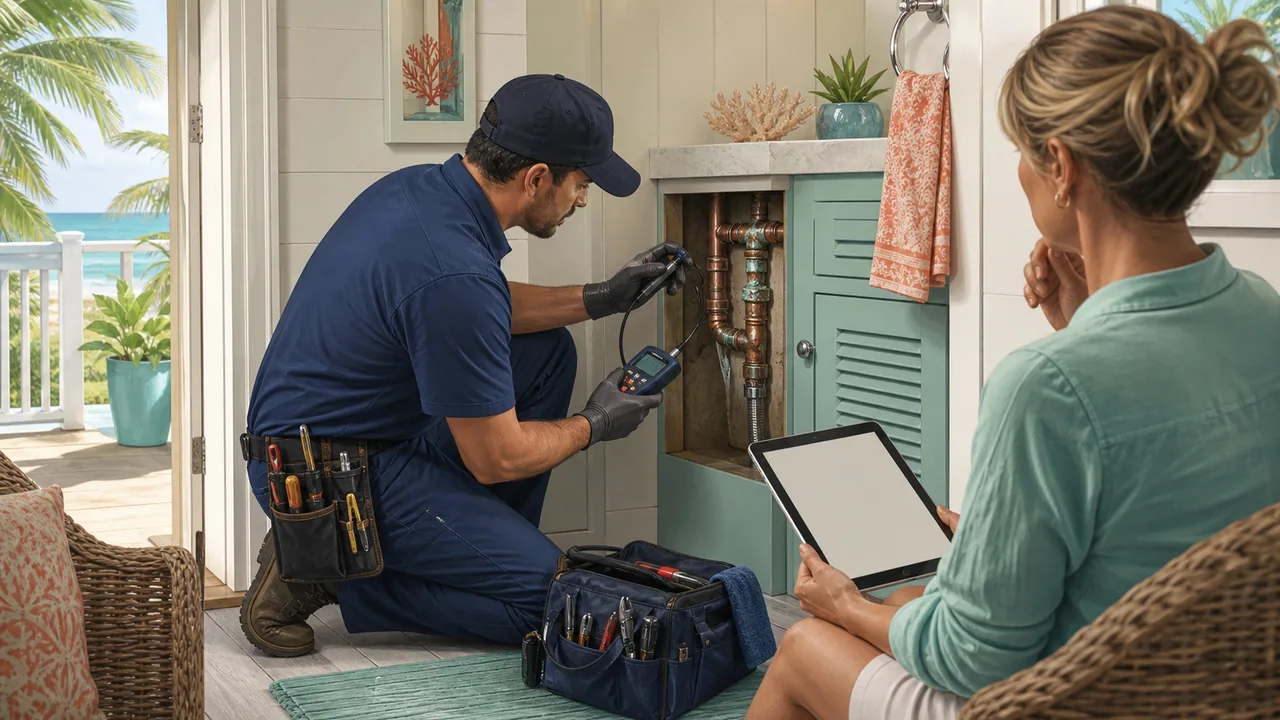
A leaking supply line, a stopped restaurant drain, and a whole-house repipe need different plumbing companies and different first calls. In Key West, access, occupied vacation rentals, older assemblies, condo rules, and permit responsibility can matter as much as the hourly rate.
Three local companies have unusually clear public evidence. Patti the Plumber publishes true 24/7 dispatch plus drain, sewer, camera, hydro-jetting, backflow, residential, and commercial service. George's Plumbing publishes the broadest project menu, including repairs, new construction, renovations, repiping, filtration, and water heaters. Frank's Plumbing presents a smaller established local operation with weekday hours and repair-oriented service. The right starting point depends on urgency and scope, not the largest outside star count.
Leak, drain, fixture, sewer, or water-heater problem
Tell us what is leaking—and what is already shut off
Name the fixture or system, what changed, whether water is still moving, and who can let a technician inside. Add a photo and the amount you can approve on the first visit. RealReviews records the request; a plumber still has to accept the call and confirm the license, arrival, and charge.
Local businesses compared
These are identity-checked local profiles, not paid placements. The fit notes describe differences supported by current official information; ratings shown remain attributed to their outside source.
- Model
- Patti publishes one fact an after-hours caller can check before dialing: the Key West office says a live dispatcher answers around the clock. Its current menu also names drain and sewer clearing, camera work, hydro jetting, backflow, filtration, installations, and both residential and commercial jobs.
- Best starting fit
- Start here when water is moving or a drain is backing up after normal office hours. Ask which technician and equipment are actually leaving for Key West.
- Why it is on this list
- Two current records line up. Patti's site gives 305-985-8122, a Key West address, and CFC1430849; Monroe County's contractor register attaches that same license number to Patti the Plumber.
- Confirm before booking
- A 24/7 phone promise does not establish arrival time, after-hours pricing, available equipment, or whether the first visit can complete the repair. Confirm all four before dispatch.
- Model
- George's publishes a wider project range than the other two finalists. The menu under CFC1427276 runs from repairs, drains, cameras, and jetting to repipes, utility lines, filtration, heaters, renovations, and new construction.
- Best starting fit
- Call George's when a repair may turn into a larger plumbing project. Before approving it, divide the immediate correction from the repipe, remodel, treatment, heater, or permitted follow-on work.
- Why it is on this list
- The official site publishes a Bertha Street address, 305-916-0500, CFC1427276, service pages for each major scope, multiple Lower Keys service areas, and 24-hour emergency availability.
- Confirm before booking
- The imported RealReviews phone differs from the current official site. Use the official 305-916-0500 number, confirm the legal contracting entity, and verify the license in DBPR before authorizing regulated work.
- Model
- Established Key West plumbing contractor publishing weekday service, a live office contact, residential and commercial examples, and an operating history dating to 1989.
- Best starting fit
- Scheduled weekday repairs and owners who prefer a smaller local office with a long published operating history.
- Why it is on this list
- The official site resolves the identity to 1609 United Street and 305-293-0227, publishes Monday-Friday hours, and describes repair and installation examples.
- Confirm before booking
- The official site does not publish a complete service matrix, emergency commitment, or license number. Confirm the exact job type, current license, dispatch charge, and warranty before booking.
Call differently for an active leak, a stoppage, and a planned project
For escaping water, make the safety decision first. Use a fixture shutoff or main valve only if it is safely reachable; do not cross energized equipment, work below a sagging ceiling, or touch contaminated drainage. Then give dispatch a short incident record: where the water appeared, when it started, which rooms are wet, and whether another condo or a common line may be involved. Let the plumber decide whether that record calls for an emergency visit, leak detection, drain equipment, or restoration help.
Describe a stoppage by testing the pattern, not by naming a cause. Report every slow or backing-up fixture and what changes when a toilet flushes or another tap runs. For a repeat blockage, add the earlier service dates, what was cleaned, possible grease, roots, foreign material or recent construction, and whether a cleanout is accessible. The desk should tell you what the initial charge buys: clearing alone, camera footage, locating, jetting, fixture removal, or diagnosis.
Planned work needs a different packet. For a heater, include the model, serial number, fuel or power, tank size, and leak point. For a repipe, backflow assembly, renovation, or new build, add the existing pipe material, plans, fixture schedule, association rules, and target date. Ask for separate prices for the present repair, code work, optional upgrades, finish restoration, and work left to another trade.
- Active leak: source, shutoff status, start time, affected rooms, electrical risk, and access.
- Stoppage: affected fixtures, backup location, recurrence, prior work, cleanout access, and contamination.
- Equipment: model, serial, age, fuel, symptoms, error code, drainage, and installation constraints.
- Project: drawings, fixture list, existing materials, demolition, finishes, permits, inspections, and schedule.
A useful plumbing price answer starts with the charge structure
There is no honest island-wide price for 'a plumber' because a visible faucet cartridge, concealed slab or wall leak, main-line stoppage, corroded repipe, and permitted commercial alteration do not share a scope. The first number to obtain is the dispatch structure: service-call or diagnostic fee, travel or zone charge, after-hours premium, minimum labor, included time, equipment charge, and cancellation rule. Ask whether diagnosis is credited toward approved work.
Once the diagnosis is in, the estimate should let you draw a boundary around the job. It needs the observed failure and proposed correction, the labor basis, named parts or equipment, permit and inspection work, access and patching, cleanup, tax, and warranty. If somebody must open a wall, cabinet, tile field, roof, or slab, put both the opening and restoration contractor on the page. A paid camera or locating visit should leave something usable behind—video, a marked location and depth, a written finding, or an explicit note that only a verbal opinion is included.
Unknown conditions belong behind a dollar gate. Authorize diagnosis up to a written not-to-exceed amount, then require another approval before the scope moves. On a larger job, line the proposals up by fixture count, pipe route, equipment model, finish allowance, exclusion, inspection milestone, and payment date. Drywall, trenching, electrical work, disposal, permits, and finish restoration do not disappear because the lowest total left them out.
Run the DBPR search three ways before relying on the proposal
Use the number printed on the proposal for the first DBPR search. Use the individual qualifier's name for the second and the contracting organization for the third. Florida's system ties regulated construction work to an individual license that qualifies a business; all three views should resolve to the same current status, classification, expiration, and proposed company. A similar trade name, an employee badge, or a license that belonged to an earlier business does not close the match.
Certified plumbing licenses allow statewide work; registered licenses are limited to specified jurisdictions. DBPR lists plumbing among the contractor categories requiring certification or registration. Key West also requires businesses operating within city limits to maintain the applicable Business Tax Receipt, while the Building Department controls permits and inspections. Ask which company pulls the permit and whose license appears on it.
Insurance should match the contracting entity and work. Request current general liability and workers' compensation evidence directly relevant to the job, particularly when technicians enter a condominium, commercial kitchen, hotel, crawlspace, roof, or occupied rental. License and insurance verification do not prove workmanship, but failure to resolve either is a reason to stop.
Know when a repair becomes a permitted Key West project
The City of Key West states that a building permit is generally required before permanent or temporary work valued above $1,000 including labor and materials, at the building official's discretion, and for structural modifications regardless of cost. Trade requirements vary by scope. Do not ask a contractor to label regulated work a minor repair merely to avoid review.
Reserve a permit row in the proposal. It should show a yes-or-no determination, identify the plumber or owner as applicant, and name the documents, fee, timing, inspections, and final record still due. Key West asks for a detailed scope and job valuation in a complete package; each licensed trade handles its own submittal and inspection requests. A blank row is a question to resolve, not permission to proceed without a permit.
Historic District review usually matters when plumbing work changes an exterior wall, vent, roof penetration, equipment location, or other visible feature. Condo and commercial work can add association, fire, accessibility, health, or shutdown requirements. Give bidders the same property conditions so each estimate includes the same compliance work.
Protect the property when repair and water damage overlap
Keep two records when a leak has already damaged the building. The plumbing record should state the date, suspected cause, correction, test performed, parts replaced, photographs taken, and openings left behind. The restoration record should carry the moisture map, drying readings, contaminated-material decisions, contents work, and reconstruction scope. That division shows where source repair ended and building recovery began.
At a condo, hotel, restaurant, or rental, authorization can be one signed note. Record the manager notified, the unit or common-area boundary, the approved shutdown, who provided access, and the spending cap. If a tenant or employee may only open the door, write that limitation beside the signature; admission is not approval for unlimited repairs.
Open an insurance file before demolition when a claim is possible. Save photographs, the incident report required by the policy instructions, any damaged component practical to retain, and the plumber's dated observations. None of those items guarantees coverage. Likewise, permission to stop the leak does not authorize open-ended drying or reconstruction; those services need their own scope.
Read the invoice story, not the blended star average
RealReviews names the source beside every outside rating because the number may combine years of unrelated jobs: emergency drains, routine office calls, heaters, renovations, and commercial plumbing. It does not identify the technician on duty today, the equipment on the truck, or whether the proposed permit and price fit this address.
Match the account to the job. A useful emergency review tells you whether the office answered, gave an arrival update, explained the diagnosis, stopped the damage, cleaned up, and produced an invoice that made sense. A useful renovation review deals instead with the original scope, permit, schedule, trade coordination, priced changes, finish protection, and callbacks. Treat a lone dramatic account as a question; give more weight to a pattern across comparable work.
For a substantial project, request two recent references for the same kind of work. Replace “Were they good?” with six factual questions: Did the first estimate hold? Who pulled the permit? How were occupied rooms protected? Were changes priced before work? Did inspections close? What happened after the callback? Those answers reveal a project history the blended average cannot supply.
Sources and verification
Rules and public requirements link to the responsible agency. Business-specific service claims are checked against privately retained official material, while public ratings remain attributed to their original source. RealReviews does not turn outside reviews into invented testimonials, blend unrelated platforms into a house score, or sell placement in these comparisons. Recheck licenses, availability, scope, and price before hiring.
Frequently asked questions
Which Key West plumber publishes 24/7 emergency service?
Patti the Plumber publishes live 24/7 dispatch on its current official service page. George's Plumbing also says 24-hour emergency service is available, while its published office hours are Monday-Friday, 9 a.m.-5 p.m. Confirm that a technician is actually being dispatched, the estimated arrival window, the after-hours charge, and what the first visit includes.
How much does a Key West plumber cost?
Angi's 2026 national data—a benchmark, not a Key West quote—puts a service call near $100-$250, ordinary labor around $45-$200 per hour, and an emergency fee around $300-$400. Island travel, after-hours dispatch, access, equipment, and parts can change the total. A usable local quote states the diagnostic charge and included time first, then the labor basis, emergency premium, equipment, parts markup, permit, and any credit toward repair. Cap uncertain diagnosis in writing. Once the failure is known, approve the correction and exclusions separately, including who opens and restores a wall, cabinet, tile field, or slab.
Does plumbing work in Key West need a permit?
Yes—many plumbing projects require a permit. Installations, alterations, repipes, water-heater changes, utility-line work, and construction commonly require review. Key West says a permit is generally required above $1,000 in labor and materials, at the building official's discretion, and for structural modifications at any value. Have the plumber write the determination into the proposal and verify an uncertain scope with the Building Department.
What should match in a Florida plumbing-license search?
Make a three-way match: the proposal's license number, the named individual qualifier, and the contracting business should resolve to the same current DBPR record. Confirm status, classification, and expiration, then compare that business name with the proposal and permit. A certified plumbing contractor uses a CFC code and may work statewide; a registered plumbing classification is geographically limited.
What belongs in the first plumbing quote request?
A strong first message can read: “Condo at [address], third floor; kitchen supply is leaking since 8 a.m.; fixture valve is off; unit is occupied; photos attached; access and parking are arranged; association contact is [name]; approve diagnosis up to [$].” Add prior repairs and, for equipment, its model and serial number. For planned work, attach the drawings and fixture schedule and state the existing pipe material, finish responsibility, and desired completion date.